






Are you ready to grow your business?

Top 10 Traditions in Germany you need to know

Written By:

Gino Peters

Reviewed By: Belinda E.

June 3, 2026 7:32 pm

Category Tag: News

The rise of remote work made international expansion much easier in recent years, but hiring abroad still comes with legal and administrative complexity, as every country has its own labour laws and payroll rules that must be followed. In addition, not many companies can open a new entity in every new market that they are expanding into. That is when the Employer of Record (EOR) solution comes in handy. 

The EOR serves as the legal employer on paper, while the client company manages important activities related to the employees responsibilities and performance. 

In this guide we will cover what an employer of record is, how it works in detail, how much it can cost and which business should consider an EOR solution. 

What is an Employer of Record (EOR)?

An Employer of Record (EOR) is a third party service provider that legally employs a person on behalf of another company in the country where the employee officially resides. As an official employer the responsibilities of EOR include issuance of an employment contract, processing payroll and withholding taxes and necessary social security contributions, as well as preparation of offboarding documents or any documentation that need to be signed by the employer. In addition, EOR ensures the compliance with local labour laws and serves as a first point of contact for any legal disputes. 

The client company that hired the employee through an EOR also has a list of responsibilities. As an Employer of Record does not have the visibility on operational activities behind the scenes a client company needs to provide direction and ensure proper team integration. 

In simple terms, the EOR provider acts as a legal employer in the country of the employee’s residence, while the client company takes on day-to-day manager work. 

Responsibility

Employer of Record (EOR)

Client Company

Employment contracts & any other official documentation

  •  
 

Payroll processing

  •  
 

Income tax & social security contributions

  •  
 

Compliance with local labour laws

  •  
 

Statutory benefits administration

  •  
 

Managing daily work and projects

 
  •  

Setting goals and performance expectations

 
  •  

Providing equipment and tools

 
  •  

Leading the employee’s team and workflow

 
  •  

Employer of Record solutions gain more and more popularity in the field of global expansion as they allow businesses to hire best candidates fast and easy while staying compliant with local employment regulations. More information about EOR service are available if you would like to understand more.

EOR Meaning

The term “EOR” is the abbreviation for Employer of Record

Employer in this instance stands for the company that hires the employee and takes on duties related to it, such as onboarding and offboarding process, payment of wages and compliance with other legal requirements. 

“Record” from the EOR perspective refers to official registration with government authorities. The name of the EOR provider is stated in all payslips and tax filings, and should also be listed by the employee in any documents where employer must be stated, such as mortgage or loan applications. 

One might ask a question of why this legal structure exists. As it is not possible to provide an employment contract directly to a person that legally resides in another country, the business expanding abroad typically needs to establish a local entity. That involves legal registration, arrangement of local bank accounts and organisation of payroll structure, as well as compliance with local law. 

EOR allows to simplify the global hiring and reduce administrative burden through their existing legal entity. 

There are some other hiring models that can be confused with EOR. 

  • EOR and PEO 

Many sources online refer to EOR as “international PEO”, which may create confusion as these models have 1 important difference. 

A Professional Employer Organisation (PEO) serves as a co-employer of a client company. In other words, a business must already have an established entity in the country. The hiring tasks are, therefore, shared between 2 companies, while legal liability stays only with the client company. In the EOR model all legal risks are being taken by the official employer. Read more about the difference between PEO and EOR here. 

  • EOR and staffing agency 

Staffing companies mainly provide assistance for short-term projects by providing temporary workers. If the client wishes to employ a person for a longer time, EOR approach must be chosen. 

  • EOR and contractor model

Contractor agreements assume the involvement of independent workers rather than employees. This model is also often used for temporary, project-based assignments. It is important to remember that there is a big misclassification risk between a contractor and an employee in the company which can lead to potential legal issues. An EOR ensures that employment is legally compliant with local labour law. 

How does an Employer of Record work?

While it may sound complicated at first, a process behind the employer of record model is relatively straightforward. 

  1. The operating company selects a candidate 

The client company recruits the employee they want to hire in another country 

  1. The EOR becomes the legal employer & local employment contract is issued

The Employer of Record uses its local legal entity to prepare and issue an employment contract that complies with labour law of the country where the employee is based. Depending on case-by- case situation, the work visa might need to be secured beforehand. Our company provides immigration services, more details can be found here. 

  1. Payroll and taxes are managed 

The EOR takes on recurring responsibilities related to a payroll and ensures correct processing of income tax, social security contributions etc

  1. Benefits are administered

Paid leave, sick leave, pension contributions and any other statutory benefits are being managed by the EOR. 

  1. Ongoing compliance and HR support

It is the responsibility of the EOR to monitor changes in local labour law and ensure ongoing compliance. 

Example: 

Imagine a UK-based tech company found a perfect candidate in Germany for a position of a software developer. 

Instead of going through the administrative burden of opening a legal entity in Germany, the company chooses to work with an Employer of Record. The EOR hires the developer under a German employment contract and manages payroll and taxes. At the same time the UK company welcomes the new employee in the team and manages the daily work of a developer. 

What services does an Employer of Record provide?

The Employer of Record does more than just providing an employment contract to the employee. Typically a wide range of HR and compliance services is included in the EOR offer. For example, read about the services included in our EOR package here. 

  • Employment and HR administration 
  • Locally compliant employment contracts and support with other documents requested by authorities
  • Employee onboarding 
  • Employee record management. For example, control over PTO 
  • Payroll and tax management 
  • Regular payroll processing 
  • Tax withholding and reporting of social security contributions with authorities
  • Payslip generation and creation of annual wage tax certificates 
  • Benefits administration 
  • Management of statutory benefits 
  • Pension contributions (where required) 
  • Support with benefits such as maternity leave allowance, sick leave allowance etc
  • Compliance and risk management 
  • Insuring compliance with local labour law 
  • Management of onboarding and offboarding processes 
  • Representation in difficult legal and court cases 
  • Additional services:

Some EOR providers ( such as ThisWorks EOR Services) provide additional services such as: 

  • Work permit and dependent visa support 
  • Background checks 
  • Relocation support 
  • Value added services: support with housing, company car, banking, etc ( depending on the country). 

This vast list of services allows businesses to manage international teams, while staying compliant and avoiding complex local employment administration. 

Benefits of using an EOR service

There are multiple advantages the businesses can get from working with an Employer of Record provider.

  • Faster global hiring 

Setting up a new entity can take up to several months. With an EOR the hiring process can take several days. 

  • Reduced compliance risk 

A trustworthy EOR provider ensures the compliance with all local regulations. As the labour law varies greatly between countries, having a knowledgeable party to rely on can make a big difference. 

  • Lower expansion costs

Establishment of a new entity is not only a time-consuming process, but also costly. With EOR services these costs can be avoided. 

  • Access to global talent

The location of a remote candidate is not a problem if the company uses Employer of Record services. In other words, the best candidate for specific business purposes can be chosen. 

  • Scalable hiring model

EOR services are ideal for organisations that want to scale international hiring quickly. They are particularly useful in the following situations: 

  • Remote-first teams and organisations 
  • Companies testing new markets abroad 
  • Startups expanding internationally

How to choose the right Employer of Record

Choosing  between several EOR providers is important, as it influences not only compliance, but also employee experience for new hires and how your company is perceived on the job market. 

Here are some important things to keep in mind when deciding on your EOR partner:

  • Geographic coverage 

Make sure that EOR provider can cover the country where you want to expand globally. Read about our EOR coverage here.

  • Pricing transparency

Check that EOR provider does not have any hidden costs and the pricing is clearly outlined in your MSA. 

  • Compliance expertise 

A strong EOR provider should have a team of experienced local HR specialists who understands all in and outs of a national labour law. 

  • In-house vs partner model 

Some EOR providers rely on their third-party partners, while others manage employment directly through their own local entities. 

  • Customer support

It is important to find a EOR partner that helps with any questions or concerns in a quick and professional manner. That can be crucial when dealing with employee offboarding or any legal disputes.

Warning signs

Understanding the importance of choosing a right party, your company should be cautious of providers that lack local expertise and cannot give clear answers to your labour law questions. In addition, companies with slow response times can  prove to be unreliable in critical situations. Furthermore, providers with complex pricing models with many hidden fees can create a lack of cost transparency and result in unforeseen expenses. 

By selecting a provider with strong expertise in local labour law and reliable support from dedicated teams, your company can ensure a smooth international growth. Learn why companies choose ThisWorks as their EOR partner. 

How much does an employer of record cost

The vast coverage of services the employer of record provides makes many businesses ask how much an EOR costs. 

Pricing models vary greatly on the provider and the country of coverage, but most EORs use one or more of the following structures. 

  1. Flat monthly fee per employee. 

The EOR provider charges a fixed monthly fee for each employee they have on the payroll from the client. 

  1. Percentage of salary

While not being a popular approach, some EOR providers charge a percentage of the employee’s salary, typically ranging between 5%-15%. 

  1. Setup fees

Some providers charge onboarding or offboarding fee for each employee. 

The fee that the business needs to pay to an EOR provider also depend on the location of a service. Local labour law complexity of some countries can influence the fee. In addition, some countries have specific statutory benefits and payroll administration requirements. Furthermore, employee headcount in the specific location can influence the fee. 

EOR vs setting up a legal entity

To establish a new entity the organisations needs to go through legal and tax registration. In addition, accounting support and ongoing compliance costs such as the fees for local labour lawyers can make setting up a legal entity significantly more expensive. 

An EOR allows companies to expand globally without these upfront investments.

EOR vs hiring contractors

Some businesses decide to hire international workers as contractors. However, this approach can often lead to a misclassification risk, which can cause legal and tax liabilities. 

A professional EOR provider ensures that the new starters are compliantly onboarded under local employment regulations. 

 EOR FAQs

  • Is an EOR the same as a PEO?

No.  PEO model assumes co-employment and requires the business to already have established local entity, while EOR employs new talents through its own entity only. 

  • Can an EOR hire contractors?

While some EOR providers can support hiring contractors, it is important to remember that main function of EOR is the employment of full-time workers legally in a country. A risk of misclassification between EOR and contractor should be also considered carefully. 

  • Is an employer of record legal?

Yes, when established and structured properly, Employer of Record entities are legal and widely used for international expansion by many companies. 

  • When should you use an EOR?

The most common reason for using EOR include: 

  • Hiring employees located in another countries remotely
  • Testing new markets before establishing an entity 
  • Expanding internationally
  • Can you switch from EOR to your own entity?

Yes. Many companies initially hire through an EOR for the ease and speed of expansion and later transition employees to own legal entities upon their establishment. It is important to remember that some countries require specific procedure to be followed in such a scenario.

Get in touch with ThisWorks

Expanding your team globally does not need to be long and administratively complex. 

With the use of Employer of Record the businesses can have access to the best talent from around the world while ensuring full compliance with local labour laws. 

ThisWorks can support your global expansion with our compliant Employer of Record services. 

Contact our team to find our how we can help your international team glow fast and compliantly!

Germany, in central Europe, is famed for its economic strength and centuries-old culture. From charming Christmas markets to thrilling Pentecost bull racing, these traditions showcase the country’s rich history and different regional cultures. In this thorough investigation, we will explore 10 unique German customs that are important to its culture, providing depth and complexity to each.

1. Weihnachtsmärkte (Christmas Markets)

German Christmas markets, or Weihnachtsmärkte, transform city squares and ancient streets into winter wonderlands. These markets developed in the Late Middle Ages as winter shopping destinations. The holiday season runs from late November until Christmas Eve. Christmas markets feature crafts, decorations, and treats. 

Each market is unique, and the Nuremberg Christkindlesmarkt has a centuries-old gingerbread cookie tradition. Smoking sausages, roasted chestnuts, and spicy Glühwein fill the air. No Christmas market is complete without the Christmas Tower and Nutcracker. The Christmas pyramid, a wooden carousel with exquisite miniatures, spins magically with candlelight. The Christmas symbol Nutcracker originated in Erzgebirge, Germany.

2. Oktoberfest

Oktoberfest honors Bavarian culture and traditions despite its beer connotation. Crown Prince Ludwig married Princess Therese of Saxony-Hildburghausen on October 12, 1810. Munichers were invited to the royal celebration on the Wiesen fields in front of the city gates, starting Oktoberfest. The parade with Munich mayor tapping the first beer keg in the “O’zapft is” ceremonial starts the celebration. 

According to an official statistics, the Munich Wiesen counted last year (2023) 7.2 million guests compared to 2022 where 5.7 million attended during the 18 days of festivities. People from all over the world come to the Munich Oktoberfest to experience the extraordinary celebration. 

At the event, millions of dirndl-clad people enjoy pretzels, sausages, and roast chicken. Traditional Bavarian music and rides liven things up. Oktoberfest beer is high-quality due to the 1516 German Beer Purity Law. Munich and neighboring brewers showcase their best beers in massive beer tents with themed entertainment. The 16-day celebration, from late September to the first Sunday in October, attracts foreign travelers to Bavaria’s traditions and hospitality.

3. Karneval (Carnival)

A colorful pre-lenten celebration called Karneval, Fasching, or Fastnacht is celebrated in the weeks preceding Ash Wednesday. Cologne, Düsseldorf, and Mainz have the most lively Karneval celebrations. Karneval started as pagan winter-to-spring celebrations with masks and costumes. Pre-Lent feasts and celebrations are Christian traditions. The spectacular costume parades, masked balls, and boisterous street celebrations characterize Karneval. If you want to buy authentic carnival costumes you can find it here

A spectacular parade of brilliant floats, marching bands, and costumed revelers concludes Rose Monday in Cologne. Karneval floats often spoof current events and celebrities. Masked balls, social events, and the carnival prince and princess election make up Karneval, the “fifth season” of the year. Finally, the Nubbel, a straw effigy reflecting the previous year’s crimes, is burned on Shrove Tuesday (Fat Tuesday). Karneval is a time to unwind and appreciate this colorful tradition’s social energy. 

4. Easter Egg Hunts and Osterbaum

Easter egg decorating is a German custom of rebirth and joy. Painting easter eggs & egg decorating, comprises complex hand-painting and wax-resist motifs and is part of the German Easter decorations. The Sorbians in eastern Germany are known for their intricate Easter egg decorations. Osterbaum, or Easter tree, is a famous Easter ritual. This tradition decorates birch or cherry branches with eggs, ribbons, and other spring symbols. Communities typically have Osterbaum decorating parties when families adorn the trees to celebrate spring. Easter Sunday brings family reunions and lavish dinners. You can find unique German Easter egg designs here

Lamb, a symbol of sacrifice and resurrection, and Easter bread and cakes are traditional Easter delicacies. Easter Monday, a German public holiday, is celebrated with family trips to enjoy spring. Easter egg hunts are another beloved pastime for kids. As youngsters hunt for chocolate, candy, or tiny presents in hidden eggs, parks and gardens become treasure troves. Easter celebrates religion and the changing seasons with children’s laughter and colorful eggs.

5. Nikolaustag (St. Nicholas Day)

German youngsters cherish St. Nicholas Day on December 6. St. Nicholas (Sankt Nikolaus) and his devoted companion, Knecht Ruprecht or Krampus, depending on the location, are the focus of the legend. On the evening of December 5, youngsters anxiously leave their shined shoes outside their doors for St. Nicholas. They wake up to food, candies, and tiny presents in their shoes if they were nice all year. St. Nicholas, a beneficent figure with a flowing white beard and bishop’s miter, honors virtue and teaches giving. In some regions, Nicholas and Krampus personally visit children’s homes to deliver gifts.

Krampus, a horned evil beast, sometimes joins St. Nicholas to counteract his kindness. In these regions, on Krampusnacht, the night before St. Nicholas Day, things become darker. To encourage good behavior, adults in Krampus costumes scare youngsters on the streets. The Christian legend of St. Nicholas is based on the fourth-century bishop Nicholas of Myra, who was kind and compassionate. St. Nicholas tradition has merged with regional customs to create a lovely Christmas celebration.

6. Advent Wreaths and Calendars

The four weeks before Christmas in Germany are called Advent, a time for reflection and anticipation. Family Advent wreaths are popular. A symbolic centerpiece with four candles, one for each Advent week. Each Sunday, a new candle is lit to signify Christmas, with the larger center candle lit on Christmas Eve. Advent calendars are another popular German Christmas tradition. These calendars range from basic paper replicas with little doors to more sophisticated ones with pockets or drawers. 

Children open a door or pocket every day starting December 1 to discover a little gift. Advent calendars make every day festive and create Christmas enthusiasm. Other than wreaths and calendars, Advent is marked with cultural events and celebrations. Advent brings families and communities together with concerts, Christmas markets, and community gatherings that create warmth and connection. Here you can find instructions on how to make an Advent Wreath.

7. Krampusnacht

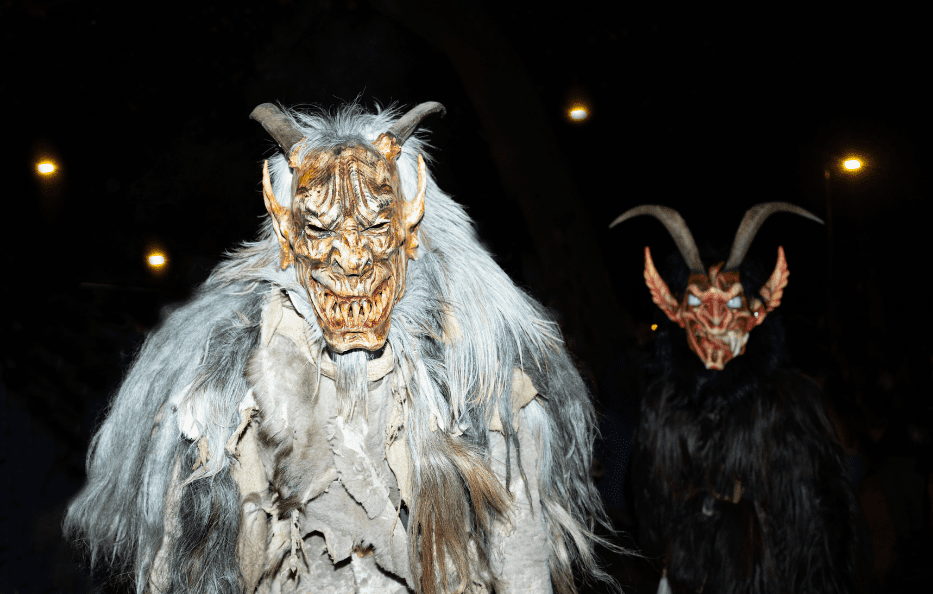
Germany celebrates Krampusnacht the night before St. Nicholas Day, especially in Bavaria. According to folklore, Krampus, St. Nicholas’s companion, punishes wayward children. The winter season is darker and more mysterious with this Alpine mythology-inspired custom.

Adults march as Krampus during Krampusnacht, wearing fur, horns, and grotesque masks. Revelers’ playful chasing and intimidation of youngsters make festivities more interesting and terrifying. Some German regions celebrate Krampusnacht, adding a unique and intriguing flavor to German culture. If you want to participate in this tradition, check out Krampus costumes for sale.
8. Maibaum (Maypole celebration significance)

Raising the Maibaum, or Maypole is a custom in many German towns to mark the transition from the harshness of winter to the warmth of spring. This centuries-old tradition entails building a tall pole that is often decorated with vibrant ribbons, flowers, and community-representative emblems. It takes cooperation and coordination for everyone to raise the maypole. The community comes together for celebrations, traditional dances, and upbeat music that accompanies the ritual. You will find traditional Maypole decorations especially in small villages.

Every location adds its own special touch to the custom; for example, some communities have competitions for climbing maypoles or adorn the neighborhood with elaborate flower displays. The Maypole, which marks the change from the chilly winter months to the colorful and flowering days of spring, represents the renewal of nature and the spirit of community. The Maibaum festival is a tribute to the ongoing relationship between people and the changing seasons, as well as a reflection of agricultural traditions.

9. Pfingstochsenspringen (Pentecost Bull Racing)

The Christian festival of Pentecost, or Pfingsten in German, honors the moment when the Holy Spirit descended upon the apostles. Although Pentecost has great theological importance, it is also observed with a variety of cultural customs, the most unusual of which is Pfingstochsenspringen, or Pentecost bull racing. This fascinating custom, which dates back to the Bavarian town of Traunstein, includes young bulls being raced around town centers, enthralling both residents and tourists. When it comes to pentecost bull racing the safety measures are highly important. 

The bull race is a display of power, dexterity, and talent that highlights the strong connection between German rural life and joyous festivities. Pfingstochsenspringen is a social event that unites people to celebrate the advent of spring rather than only being an athletic event. The race is often accompanied by upbeat music, customary dances, and regional cuisine, which fosters a spirit of happiness and unity. Everyone applauds for their favorite bulls as they thunder through the streets, bringing everyone together to celebrate Pentecost as a time of shared joy and cultural harmony.

10. Schultüte (School Cone)

For German kids, the first day of school is a big deal, and the Schultüte tradition gives this important occasion a little more enthusiasm and support. Schultüte, which translates as “school cone” in German, is a big bag shaped like a cone that is packed with candies, school supplies, and little presents. On the first day of school, parents and family give these cones to the kids as a support and celebration. It is part of the German school initiation customs.

The Schultüte is often customized to match the child’s hobbies and preferences and often matches the schoolbag and outfit. In addition to being a useful present that includes necessary school materials, it also acts as a symbolic gesture of support for the next academic endeavor. Children enter formal school with excitement and a feeling of celebration thanks to the custom, which cultivates a sense of expectation and delight.

Wrap It Up

Germany’s traditions are rich in culture, history, and regional variation. From charming Christmas markets to exciting Karneval festivities and distinctive St. Nicholas Day traditions, each tradition connects the country’s history and present. These customs celebrate community, festivity, and the connection between cultural history and daily life, whether it’s erecting a Maypole in a hamlet or racing bulls during Pentecost.


Table of Contents

Sign up for our latest news & articles. We won’t give you spam mails.

[mc4wp_form id="1237"]

ThisWorks supports companies expanding internationally.

As an Employer of Record (EOR), we enable you to hire employees in the UK, Netherlands, Germany, Poland, and Spain  without setting up a local entity. We handle payroll, contracts, and compliance, so you can focus on growth.

Global expansion made simple.

✔ Hire internationally without foreign entities
✔ Stay fully compliant
✔ Save time and resources

Expand faster with ThisWorks.

Table of Contents

Sign up for our latest news & articles. We won’t give you spam mails.

[mc4wp_form id="1237"]

ThisWorks supports companies expanding internationally.

As an Employer of Record (EOR), we enable you to hire employees in the UK, Netherlands, Germany, Poland, and Spain  without setting up a local entity. We handle payroll, contracts, and compliance, so you can focus on growth.

Global expansion made simple.

✔ Hire internationally without foreign entities
✔ Stay fully compliant
✔ Save time and resources

Expand faster with ThisWorks.